
media appearances
Conversations that don’t hold back
Also appearing in:
Financial Times
NBC Nightly News
CBC
Forbes
TVO
Financial Post
Toronto Star
Globe and Mail
Il Sole 24 Ore
Global News
The Guardian
CTV News
Bloomberg Business
La Tercera
BBC
Corriere della Sera
Christian Science Monitor
Wired
Vice
The Logic
Pivot Magazine
El Mostrador
Quatre 95
TechWire
CityNews
Maclean's
HSM Management
NPR
National Post
Financial Times NBC Nightly News CBC Forbes TVO Financial Post Toronto Star Globe and Mail Il Sole 24 Ore Global News The Guardian CTV News Bloomberg Business La Tercera BBC Corriere della Sera Christian Science Monitor Wired Vice The Logic Pivot Magazine El Mostrador Quatre 95 TechWire CityNews Maclean's HSM Management NPR National Post
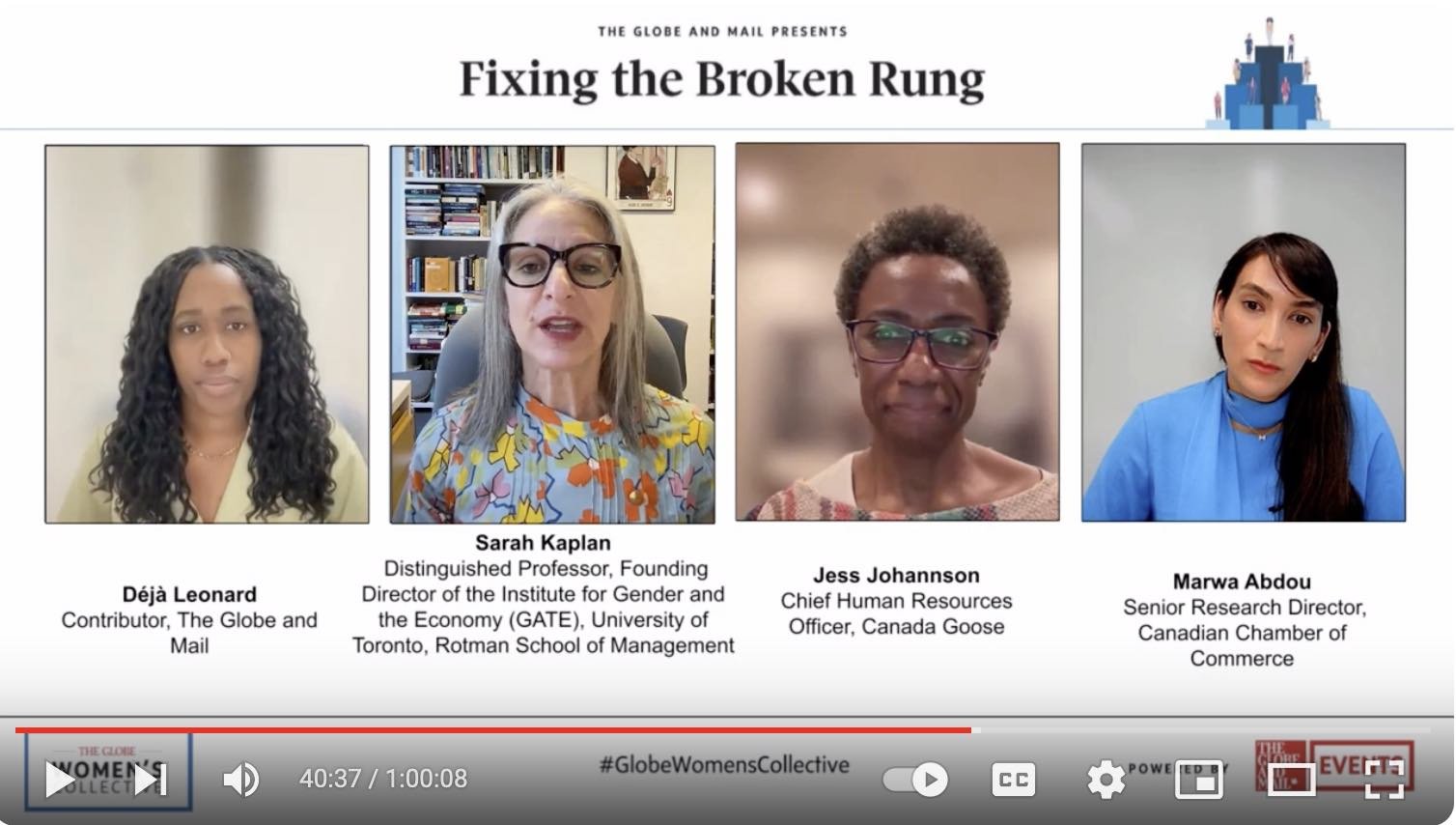
Fixing the Broken Rung: Better Approaches to Promotion and Talent Development
For decades the ‘glass ceiling’ dominated conversations about the lack of women in executive roles. But there’s growing recognition of significant gaps at the earlier stages of women’s careers. Women often stall at the entry level. For every 100 men promoted to manager, there are only 72 women, and the situation is worse for women of colour, the report found. On June 18, The Globe and Mail hosted a webcast examining how progressive organizations and thought leaders are reassessing who gets hired and promoted at work.

Inclusive Product, Service and Policy Design: Flipping the Script on Diversity, Equity and Inclusion
Current conversations about diversity and inclusion often forget that these are not just talent management issues but affect how products, services and policies create outcomes that differ by gender, race, differences in ability, Indigeneity and other intersecting identities. In this talk, titled "Inclusive Product, Service and Policy Design: Flipping the Script on Diversity, Equity and Inclusion", Professor Sarah Kaplan shares the work of the Institute for Gender and the Economy (GATE) to explore what inclusive design would look like. Using examples from across industries and sectors, we’ll examine how a more inclusive economy could be achieved by organizations.
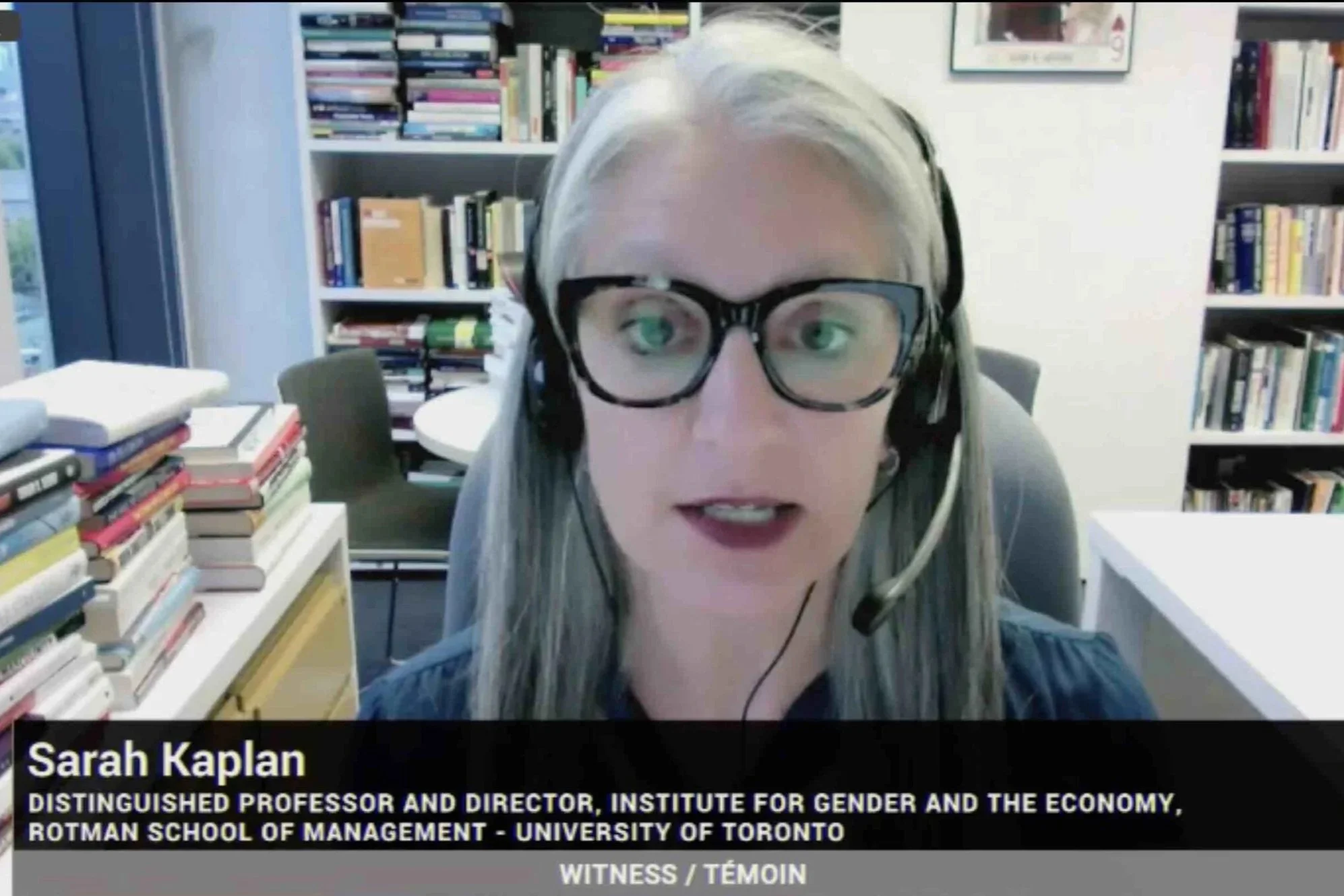
Testimony before Standing Senate Committee on Social Affairs, Science and Technology
Sarah Kaplan appeared before this committee to discuss the implementation of Gender-Based Analysis Plus in the government.
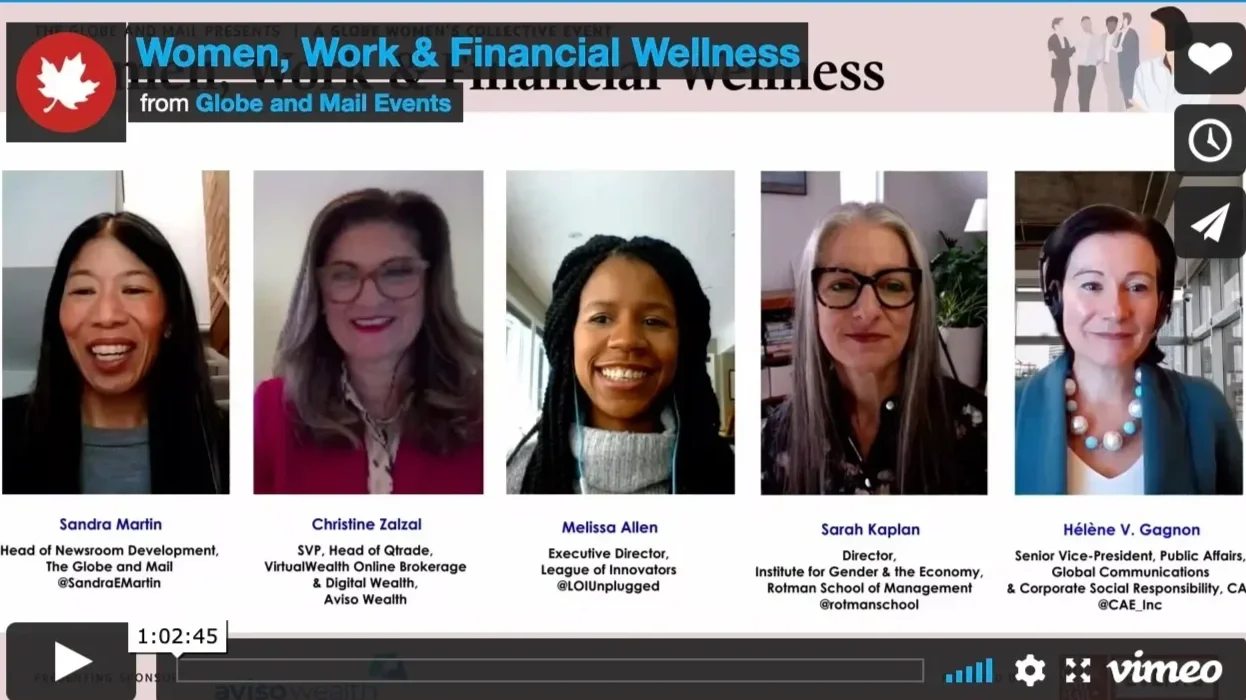
The Globe and Mail: Women, Work & Financial Wellness
Canadian women face an uncomfortable truth: they generally make less money than their male counterparts. And yet there’s no shortage of financial planning advice focused on how women can manage their personal expenses, invest in their future, and navigate the impact of major life events, including motherhood, that might uniquely affect their career progression. The Globe and Mail invited a group of female leaders to discuss how organizations can help women bridge the gap between personal responsibility for their wallets, and systemic inequity in levels of compensation.
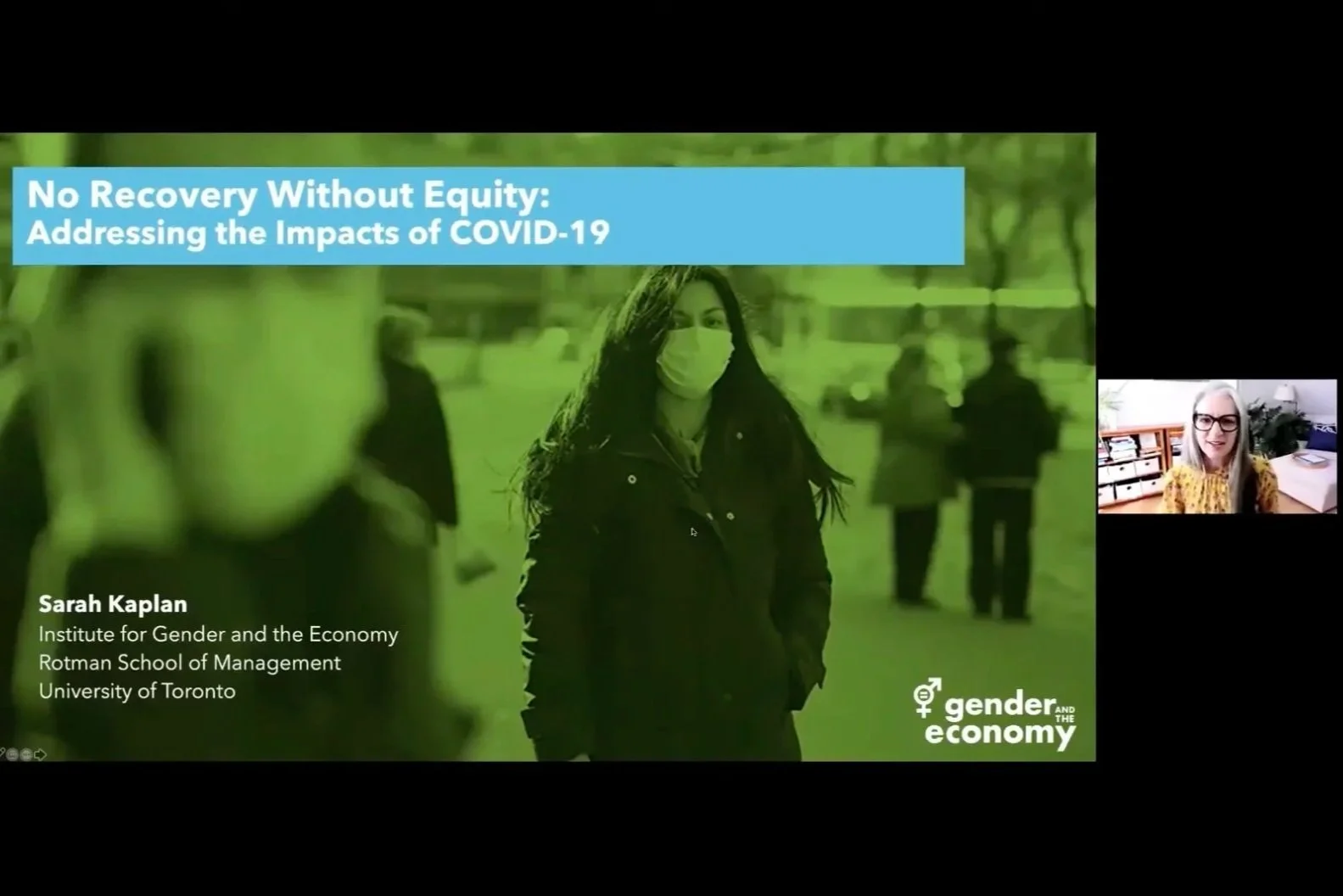
Strategic Human Capital Spring Seminar Series: Pandemic Effects
Pandemics touch every aspect of society. This seminar addresses two important topics in the context of the Covid-19 pandemic: Workplace Inequality and Remote Work. Workplace inequality is pervasive. For example, it is well established that women face greater barriers for career progression compared to men. In this seminar, Sarah Kaplan (U. of Toronto) discusses how the pandemic has differentially affected women’s vs. men’s career opportunities, as well as how it has adversely affected marginalized minority groups. How can scholars use the pandemic to better understand the drivers of workplace inequality?
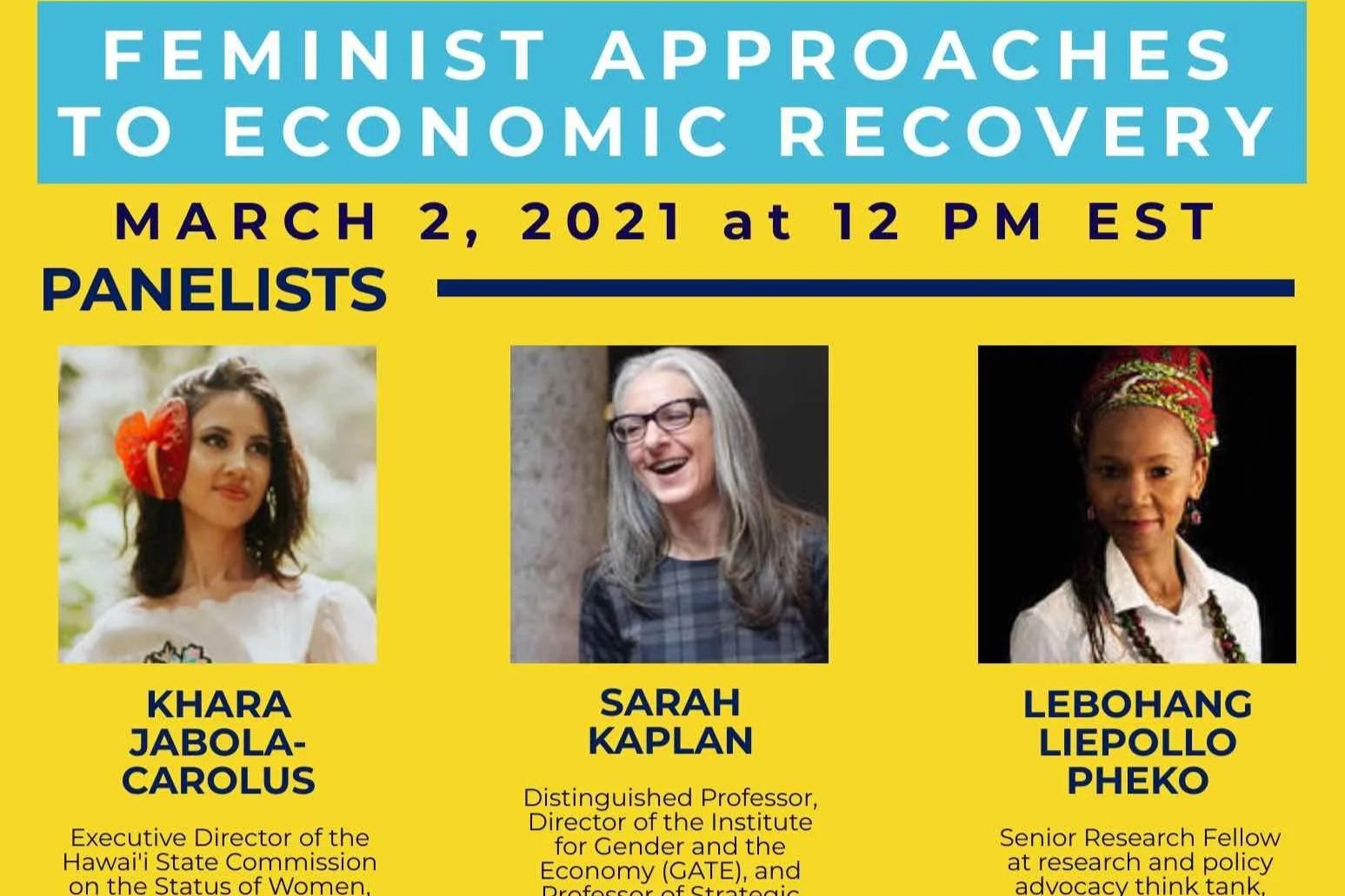
Feminist Approaches to Economic Recovery
This panel Conference on Gender and International Affairs at the Fletcher School explores the concept of feminist economics and its place in economic recovery in the age of COVID-19. We discussed how gendered analysis can enhance and improve economic policies and strategies for economic recovery. The first part of the panel covered the concept of gender-responsive economic theory and approaches to economic policy. The latter part explored the integration of feminist approaches in plans for economic recovery from the effects of the COVID-19 pandemic.

Build Back Better After COVID-19: Why Corporations Need a Radical Redesign
As we navigate this global pandemic and make plans to move forward, we’re realizing that striving for ‘back to normal’ or ‘business as usual’ isn’t good enough. “As the COVID-19 crisis and the recent Black Lives Matter protests have pointed out, ‘normal’ wasn’t so great for a lot of people,” explains Sarah Kaplan. In the latest Managing Uncertainty webinar — Build Back Better After COVID-19: Why Corporations Need a Radical Redesign — Kaplan and Professor Soo Min Toh, discuss what it means to build back better, and why rebuilding should be seen as an innovation challenge.
Atlantic Live: The Future of the Workplace
How will the pandemic change the workplace as we know it? What will corporate work environments look like in the future, as we adapt to and move on from the COVID-19 crisis? Sarah Kaplan, author of The 360° Corporation: From Stakeholder Trade-offs to Transformation, and Tracy Keogh, chief human resources officer for HP, joined The Atlantic’s Derek Thompson to discuss at this AtlanticLIVE event.
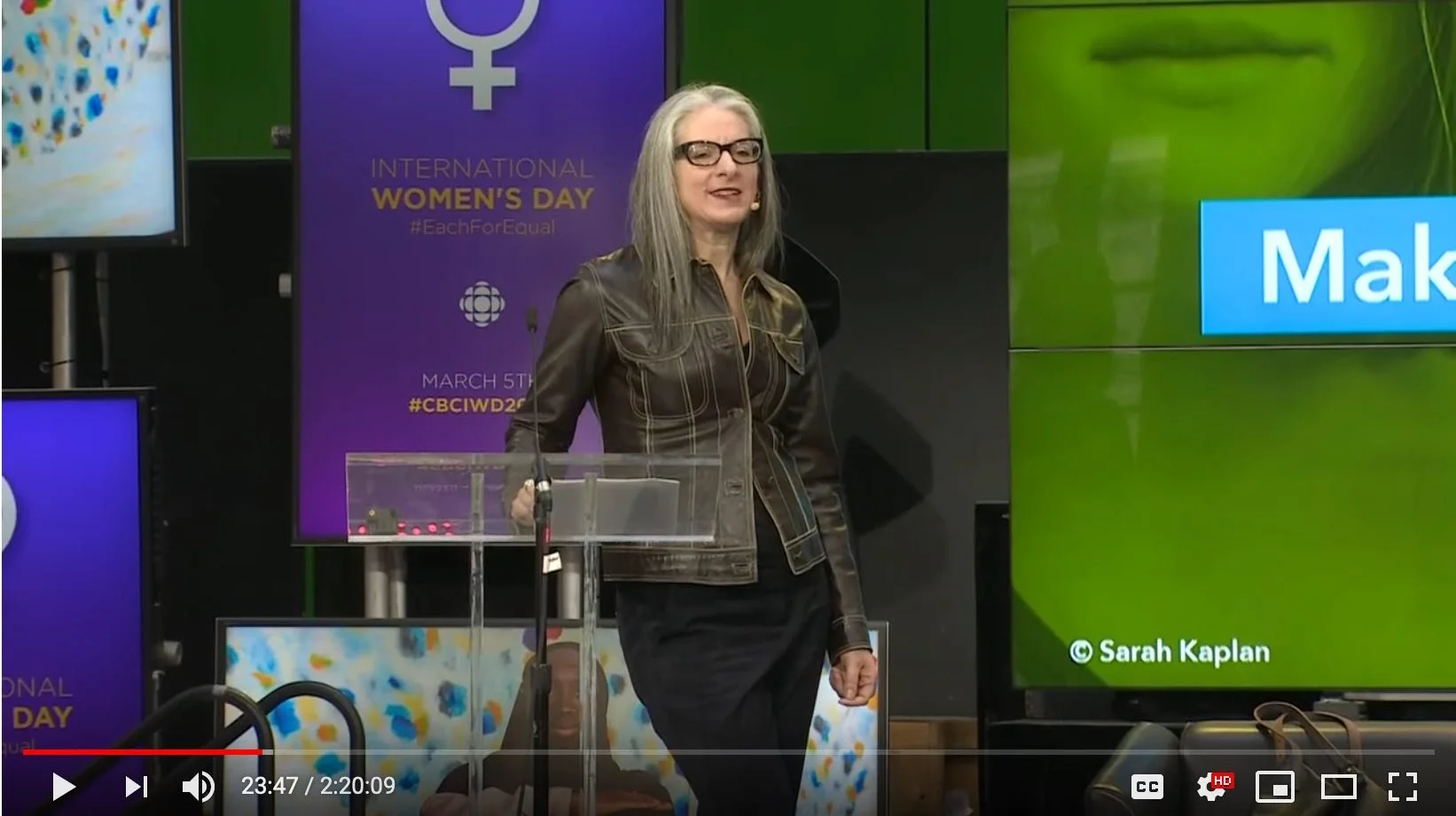
CBC International Women’s Day Celebration: #EachForEqual
This Canadian Broadcasting Corporation International Women’s Day theme is #EachForEqual, and two CBC Employee Resource Groups, Women in Tech and Visible Women, have come together to organize, celebrate and advocate for and spread awareness about creating equality in the workspace for women working across industries. Sarah Kaplan gave the keynote and then participated in a panel discussion. The topic of her talk was “Making real progress on gender equality.”
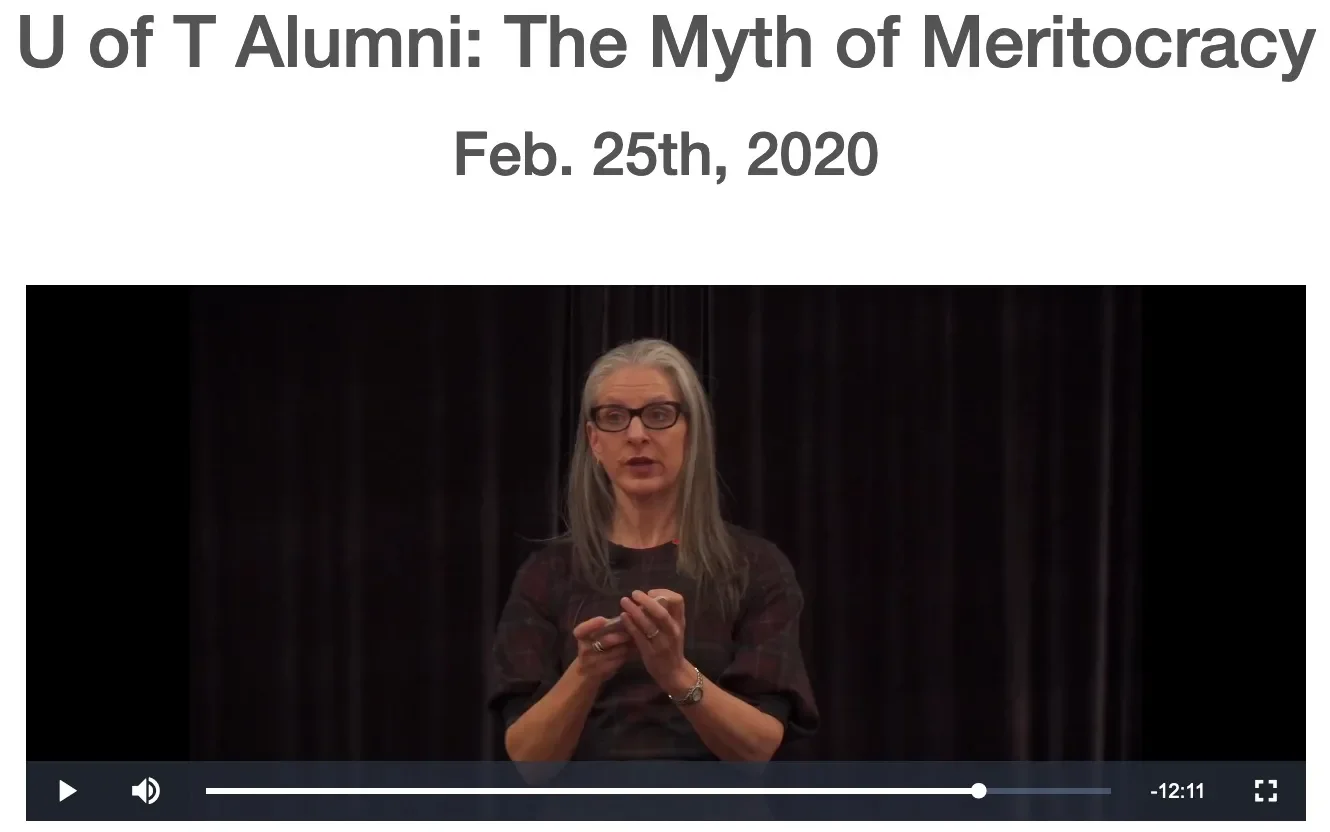
U of T in Your Neighborhood: The Myth of Meritocracy
Despite decades of effort, our path to gender equality has been littered with roadblocks. One of the most prominent is the notion that any deliberate effort to promote greater diversity will undermine our meritocratic system. This is the excuse given by boards of directors when they explain why they don’t have women on their boards. In this talk for U of T in Your Neighborhood, Kaplan draws on cutting-edge research to bring a fresh perspective to this conversation. Showing that these arguments are based on false premises, she explains how our systems of education, recruiting, and promotion are often unmeritocratic because, due to unconscious bias, the contributions of women and people of color are devalued. But, she argues, training in unconscious bias isn’t the solution. Indeed, it can often lead to backlash. Instead, she reveals what does work.

Testimony before Standing Senate Committee on Banking, Trade and Commerce regarding Bill C-25
Sarah Kaplan provides testimony to the Standing Senate Committee on Banking, Trade and Commerce regarding Bill C-25 and in particular its provisions related to board and executive leadership diversity.

The Challenge of Gender Diversity
In this Rotman Short Talk, Sarah Kaplan makes the case that gender equality is not just a social imperative but a business one, pointing to the reputational, legal, and talent costs companies face when they fail to address it. Despite widespread diversity efforts, progress has stalled because organizations are not making real, sustained investments across hiring, pay equity, transparency, and accountability. She argues that treating gender equality as an innovation challenge, rather than a compliance exercise, is the most promising path to breaking the stalemate.