
media appearances
Conversations that don’t hold back
Also appearing in:
Financial Times
NBC Nightly News
CBC
Forbes
TVO
Financial Post
Toronto Star
Globe and Mail
Il Sole 24 Ore
Global News
The Guardian
CTV News
Bloomberg Business
La Tercera
BBC
Corriere della Sera
Christian Science Monitor
Wired
Vice
The Logic
Pivot Magazine
El Mostrador
Quatre 95
TechWire
CityNews
Maclean's
HSM Management
NPR
National Post
Financial Times NBC Nightly News CBC Forbes TVO Financial Post Toronto Star Globe and Mail Il Sole 24 Ore Global News The Guardian CTV News Bloomberg Business La Tercera BBC Corriere della Sera Christian Science Monitor Wired Vice The Logic Pivot Magazine El Mostrador Quatre 95 TechWire CityNews Maclean's HSM Management NPR National Post
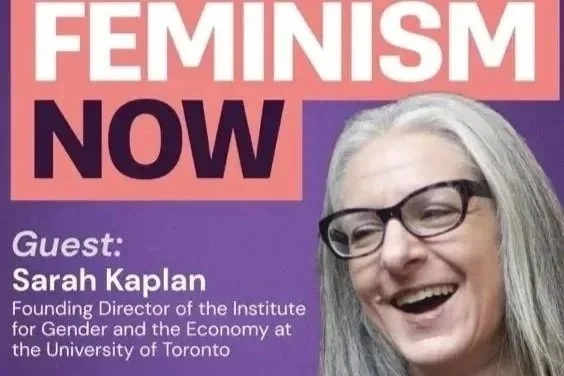
Feminism NOW
We often hear that workplaces are meritocratic. But if that was true, would white women and people of color still be earning so much less than men? Would those board rooms be quite so male? Sarah Kaplan speaks to the National Organization for Women’s Feminism Now podcast about how the notion of meritocracy is a tool of the patriarchy, justifying bias towards the people in positions of privilege and harming the careers of people who have not had this same wind at their back.
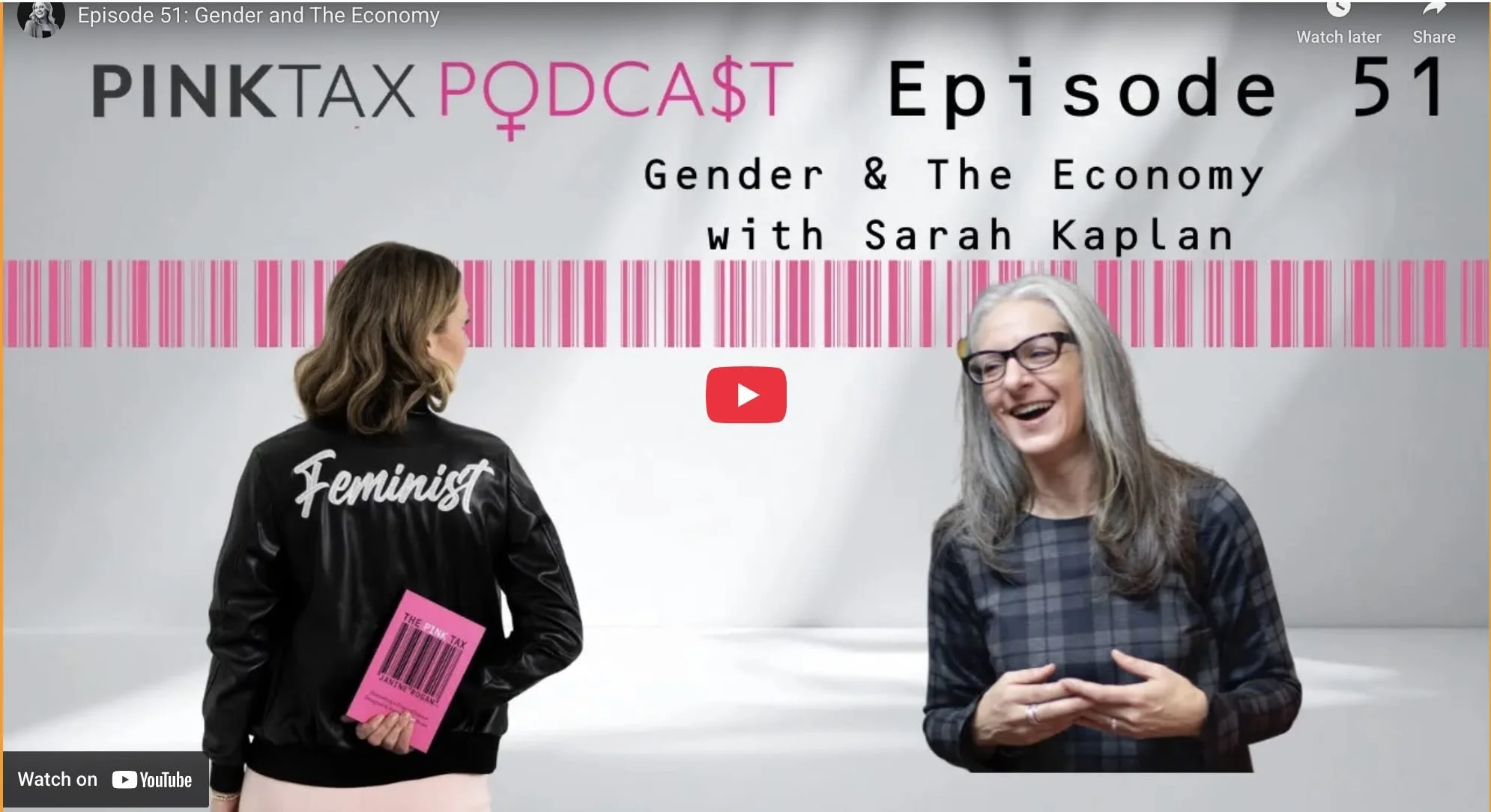
The Pink Tax podcast with Janine Rogan
In this episode of The Pink Tax Podcast, we speak with Sarah Kaplan, a leading expert in gender and the economy. We discuss the persistent issues of gender inequality, the challenges of proving the business case for diversity, and the backlash against DEI initiatives. We need more innovative solutions to promote gender equality, and we must recognize caregiving roles in leadership. We also dove deep into what meritocracy is, whether or not we actually live in one and the limitations of meritocracy.
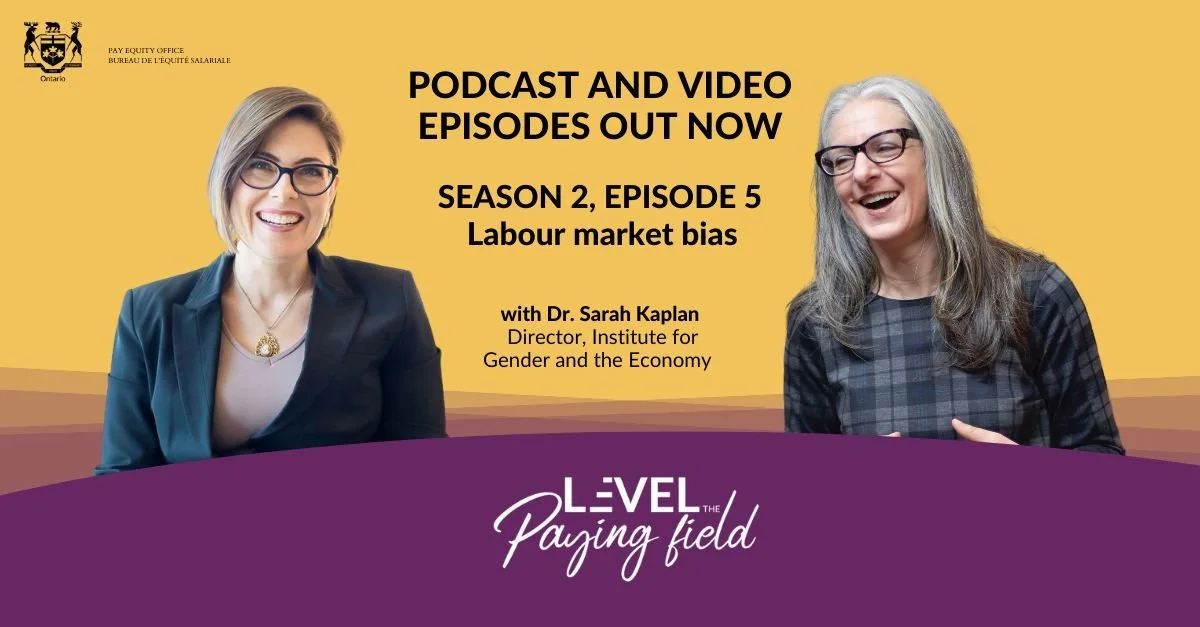
Level the Paying Field: Labour Market Bias
The labour market never started off level for women and men. Women have and continue to be clustered in the “5Cs”: cleaning, catering, cashiering, clerical and caring. Dr. Sarah Kaplan, Director, Institute for Gender and the Economy (GATE), talks to Level the Paying Field host Kadie Ward, Commissioner and CAO of Ontario's Pay Equity Commission, about gender’s role in today’s labour market, and whether we are moving to a meritocracy.

Rotman Podcast: Faculty Insights with Prof. Sarah Kaplan
The Rotman Podcast celebrated International Women’s Day with Prof. Sarah Kaplan, professor of Strategic Management and Director of Institute for Gender and the Economy (GATE) at Rotman. In this episode, Sarah addresses long-standing gender biases, her views on meritocracy and the need to establish urgency pertaining to gender-based discrimination.
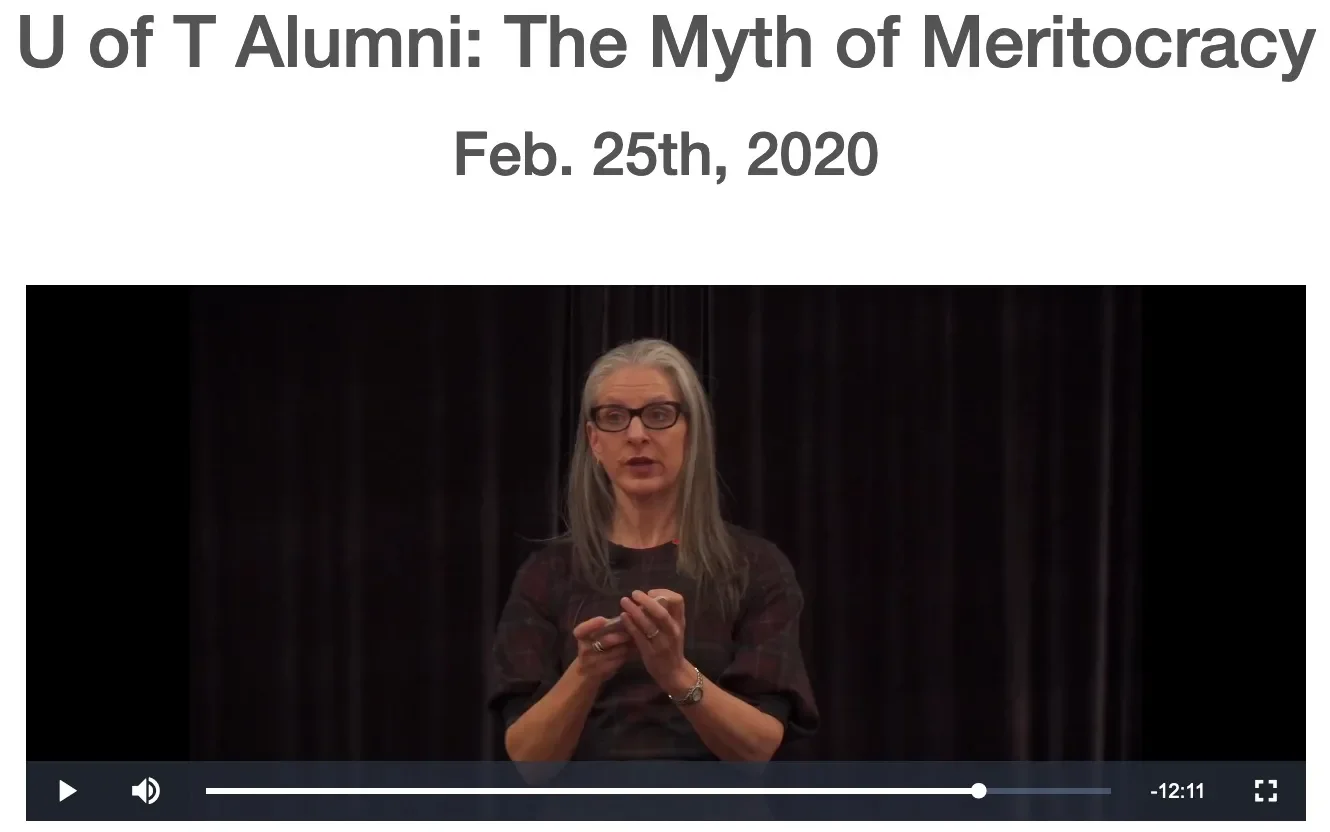
U of T in Your Neighborhood: The Myth of Meritocracy
Despite decades of effort, our path to gender equality has been littered with roadblocks. One of the most prominent is the notion that any deliberate effort to promote greater diversity will undermine our meritocratic system. This is the excuse given by boards of directors when they explain why they don’t have women on their boards. In this talk for U of T in Your Neighborhood, Kaplan draws on cutting-edge research to bring a fresh perspective to this conversation. Showing that these arguments are based on false premises, she explains how our systems of education, recruiting, and promotion are often unmeritocratic because, due to unconscious bias, the contributions of women and people of color are devalued. But, she argues, training in unconscious bias isn’t the solution. Indeed, it can often lead to backlash. Instead, she reveals what does work.
Rebooting the Gender Equality Conversation
At the Government of Canada’s Women and the Workplace Symposium, Sarah Kaplan busts five myths regarding women in the workplace and outlines actions organizations and governments can take to achieve progress towards gender equality. The Symposium which brought together leaders and champions of workplace diversity from across Canada to share tools and best practices employers need to advance women in the workforce and participate in an ongoing dialogue.
Why Progress is Slow in Gender Parity
In this Rotman Short Talk, Sarah Kaplan argues that despite decades of diversity initiatives, gender and racial inequality continues to persist or worsen due to two underexamined forces: backlash from those who experience equality as a threat to their privilege, and the simple fact that diversity is deeply uncomfortable. Research consistently shows that gender bias distorts our perception of quality even when performance is identical, meaning the common "lowering the bar" argument against diversity is not supported by evidence. She proposes that the path forward requires treating inequality as an innovation challenge, committing to constant uncomfortable conversation rather than occasional acknowledgment, and applying the same creative energy organizations dedicate to business problems to the problem of equity.
TEDx: Gender Equality as an Innovation Challenge
Frustrated with the lack of progress towards gender equality in the economy, proponents of diversity are building the "business case" for action. But, the "business case" may do more harm than good by sending signals that women need to be better than men in order to be included in corporate leadership, as investors or as entrepreneurs. In this TEDx talk, Sarah Kaplan shows how the myth of meritocracy unintentionally reinforces privilege and blocks further moves towards gender equality. She also suggests that if we treat the diversity challenge as an innovation problem, we can make progress.